Growth Means Rethinking the Way You Lead: Koray Bahar Meets the Founders Scaling Romania’s Next Success Stories
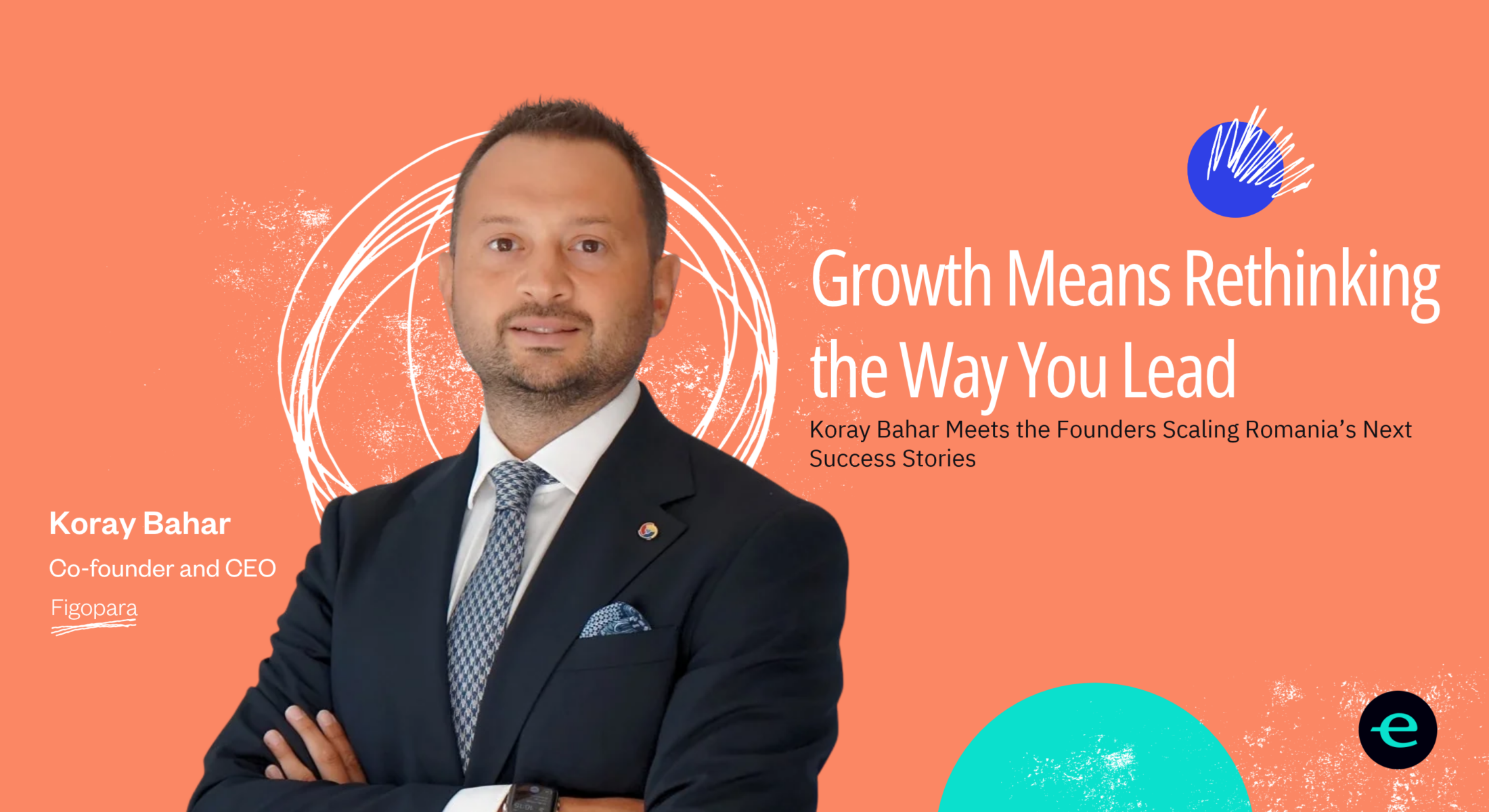
From international expansion and unexpected exits to leadership decisions and the value of a global entrepreneurial network, which we call #OneEndeavor, Koray Bahar, Endeavor Entrepreneur, shared his experience from his entrepreneurial journey with founders in Romania.
In 2014, Koray Bahar already knew he wanted to take Foriba beyond Türkiye. The company had a growing customer base, a partnership with SAP, and technology that could serve businesses across different markets. International expansion was part of its ambitions, yet it would take another four years before Foriba established its presence in Europe.
When the company finally entered Italy in 2018, the opportunity came from a market Koray hadn’t initially considered. He had expected Foriba’s next steps to be in the Middle East, Africa, or neighboring markets. Instead, a colleague dedicated to international expansion identified an upcoming regulatory change in Italy and an existing customer base that could help the company enter the market.
It was one of the experiences Koray shared during his visit to Romania, where he joined the founders in the third cohort of the Scale Up Program by Endeavor Romania for the Founders Bootcamp at Singureni Manor, followed by a separate breakfast conversation with entrepreneurs from the local ecosystem.
Koray’s perspective comes from two entrepreneurial journeys. He founded Foriba, an electronic invoicing and tax compliance company acquired by Sovos in 2019, and later founded Figopara, a fintech company helping SMEs access working capital. He has been part of Endeavor since 2015 as an Endeavor Entrepreneur, and over the years has also become a board member at Endeavor Türkiye, investor, and active contributor to the network.
Across the two gatherings, founders asked about the decisions that shape a company’s growth, from entering new markets and building sustainable sales strategies to managing teams, navigating acquisitions and an exit, and finding the right people to turn to for advice.
On international expansion: knowing when and where to grow
International expansion had been part of Foriba‘s ambitions for years, but finding the right moment and dedicating enough resources to it proved difficult. Reflecting on what delayed the company’s expansion and how it eventually chose its first European market, Koray explained:
“For us, it was a matter of focus. If you’re not focusing on international expansion properly, it becomes like a part-time job. You spend a few weeks researching markets and meeting people, and then something happens in your core business, and your attention goes back there.
Eventually, we decided to have someone focus exclusively on expansion for six months. Initially, I thought we would expand into the Middle East, CIS countries, or Africa. But we ended up in Italy because the government was introducing mandatory electronic invoicing, and we already had multinational customers operating there.
When I started Figopara, I promised myself that we would expand internationally within the first year. Six years later, we’re still focused on Türkiye. The domestic opportunity has been so significant that we’ve continued to grow here. Every business has different circumstances, and you need to understand where the opportunity really is.”
Koray also encouraged founders to make use of local expertise when exploring new markets, sharing how the Endeavor team in Indonesia helped him connect with potential partners, customers, and professional advisers before making expansion decisions.
On sales: recognizing when a strategy isn’t working
In this month’s edition of our Breakfast Series, Koray shared how Foriba’s experience selling software to large enterprises had initially shaped its approach to the SME market, with unexpected financial consequences. The company discovered that a sales model that worked for high-value contracts was considerably less effective when applied to smaller customers.
“We hired 30 employees, gave them cars, laptops, and phones, and sent them to different cities across Türkiye. The sales figures looked really good, growing every month. But at the end of the year, when I looked at the full cost of that team and the revenue it generated, it wasn’t paying off.
We knew how to sell contracts worth €200,000 or €300,000, but we were trying to use the same approach to sell something worth a few hundred euros. The customer acquisition cost was simply too high.
A year later, we started partnerships with local accounting software companies and ING Bank. They already had relationships with SMEs and could sell our solution through their existing channels. We provided the technology and support, and that helped us grow much more effectively.”
On leadership: growing alongside your company
As Foriba expanded, Koray had to adapt from being directly involved in almost every aspect of the business to leading an increasingly complex organization. Looking back at how his responsibilities evolved at Foriba and later at Figopara, he described the constant adjustments required of a founder.
“During every stage of your company, your role changes. At Foriba, I started as a part-time employee, then became a full-time employee, managed teams, started doing sales while I was still developing software, and eventually became CTO and CEO.
Almost every six months, my company became a different company, so my role always changed. I think the toughest year was 2018. At the beginning of the year, we had around 90 employees, and I knew everybody’s name. By the end of the year, we had 220 employees, and there were many people I had never met because I was spending so much time traveling for international expansion.
With Figopara, I stepped into a new industry at the intersection of technology and finance. As a computer engineer by training, building a fintech business has deepened my understanding of the financial sector and enabled me to engage in meaningful conversations with bank CEOs about their industry. As an entrepreneur, you keep evolving, learning and taking on new challenges. In many ways, every six months brings a new chapter.
Koray also spoke about the value of direct feedback from experienced leaders, recalling how mentoring conversations with former PayPal executive Sal Giambanco, whom he met through Endeavor, influenced his approach to prioritizing revenue growth.
On difficult decisions: what experience teaches you about people
Looking back at his first company, Koray identified people-related decisions as one of the areas in which he would approach things differently today. In particular, he recalled how difficult it had been to make leadership changes when someone was no longer the right fit for the company’s needs.
“I would do many things differently, but I think the most important one is about people. I was very emotional, and I hated firing people. I still don’t like it, but at the beginning, it was especially difficult for me.
During an Endeavor International Selection Panel, someone asked me who the last person I had fired was. I told him I had only recently become CEO and was trying to hire people and grow the company. But he kept asking the same question, and I had to admit I hadn’t fired anyone.
That was an important moment for me. When I returned to Istanbul, I made a decision I had been avoiding and let our CFO go. He was very experienced, but he had come from a large corporate environment, and culturally, it wasn’t the right fit for our company.
As your business grows, every stage requires different skills. Someone who was perfect for the company at one stage might not be the right person for the next. As a founder, you have to be prepared to make those decisions.”
The experience also changed how Koray approached feedback and communication within his teams. He described becoming more comfortable having direct conversations with managers and making financial and operational information accessible across the company.
On acquisitions: learning from an expensive mistake
Although Foriba went on to complete successful acquisitions, Koray’s first experience with M&A was far from straightforward. During the Founders Bootcamp, he recalled a transaction that became an expensive lesson in how acquisitions should be structured.
“My first acquisition was a big mistake. We acquired a business in 2016, or more precisely, we acquired its contracts. We paid around a million dollars, but transferring those contracts from the seller became a problem.
One month passed, then two, three, six months, and eventually we realized the seller wasn’t going to transfer the contracts as expected. We tried to reverse the transaction and recovered most of the money, but we still lost around $250,000.
I went to my co-founder and told him it was my fault. He said, ‘If I sent you to an M&A course at Harvard, I would probably spend $250,000. So let’s go and do it properly.’
After that, we completed two acquisitions successfully because I understood much better how to structure the contracts, the payments, and the whole process. You learn from those experiences, even when they are expensive.”
Koray also highlighted the human challenges of acquisitions, particularly the uncertainty employees experience when joining a new organization. Beyond the financial and legal aspects, he emphasized the importance of managing cultural integration and building trust with the incoming team.
On exits: navigating an unexpected opportunity
Foriba‘s acquisition by Sovos in 2019 came at a time when the company was actively exploring further growth through acquisitions of its own. Selling the business was not something Koray had been planning in the immediate future, but an unexpected opportunity changed the direction of the company.
“At that point, it wasn’t in my plans at all. Of course, I knew that one day we would probably exit because we had investors, and at some point, you need to provide liquidity for them. But I thought it was too early.
We were actually looking for additional funding to acquire another company in Germany. Then one of the potential investors became interested in acquiring Foriba instead. It happened very quickly, and we received a good offer at that moment.
Around 20 or 25 employees had stock options, and the founding shareholders also decided to share part of their gains with the wider team.
Before the exit, I spoke with friends who had already sold their companies because nobody really prepares you for that experience. It’s a completely different situation, including psychologically. You can be the CEO of a company that has raised millions of dollars, but that doesn’t mean your personal financial situation has changed.”
After spending several months at Sovos, Koray returned to entrepreneurship, focusing on Figopara and applying what he had learned from building and exiting Foriba.
On the entrepreneurial journey: learning to navigate uncertainty
The Founders Bootcamp also explored the personal side of entrepreneurship, including how building two companies had influenced Koray’s perspective on leadership, personal growth, and success. Reflecting on the expectations he had placed on himself over the years, he spoke about learning to manage the competing demands of business and personal life.
“I’m not able to say that I’m the best version of myself, but I always try to enjoy the journey. When I sold Foriba, I was happy, but at the same time, I was sad because I knew we could still grow that business.
A few years ago, I often felt that I wasn’t doing enough. When I spent too much time working, I felt guilty about neglecting my personal life. And when I took time away from work, I felt guilty about not being there for the business.
Over time, I realized that I need to take care of myself first if I want to be good for the people around me. I love building companies, and I love seeing the impact our work has on customers.
Difficult things will always happen when you’re an entrepreneur. The important thing is to learn from them, make sure you don’t repeat the same mistakes, and continue moving forward.”
His experience with Figopara has also required navigating economic uncertainty in Türkiye, including changes in interest rates and lending regulations that led the company to adapt its financing model and develop new revenue streams.
On Endeavor: finding people who understand the journey
Koray became an Endeavor Entrepreneur in 2015, and his relationship with the network has continued through different stages of his entrepreneurial journey.
Reflecting on the support he has received over the years, he described Endeavor as a resource that entrepreneurs can turn to at different stages of growth.
“I describe Endeavor as a toolbox. There are so many things available to support you, but you need to ask for what you need. Use the local team, the global team, and the teams in other countries.
When we were thinking about expanding into Indonesia, I had never even been there. A week before my trip, I asked our Endeavor team to connect me with the local office. They organized almost my entire week, arranging meetings with lawyers, accountants, potential partners, and customers.
By the end of that week, I felt like I knew Indonesia better than anyone else. We even started discussions about acquiring a local company. That’s how valuable the network can be, but you have to reach out and ask for the support you need.
Endeavor also helped us with fundraising. Through the network, we met investors in the United States and the United Kingdom, including IFC, which later invested in Foriba. Endeavor Catalyst also invested in the company.”
Beyond the practical support, Koray emphasized the relationships he had built with other entrepreneurs, many of whom had faced similar challenges in their own markets.
“Before Endeavor, I sometimes thought Türkiye was one of the most difficult places to build a company. Then I met founders from other countries and realized we were all facing similar challenges.
Some of the entrepreneurs I met through Endeavor in 2015 are still among my closest friends. Whenever I need advice, I can ask people who have already dealt with those situations.”
For founders participating in the Scale Up Program, Koray‘s experience offered a perspective on how access to a global network can translate into mentorship, practical support, and relationships that continue throughout an entrepreneurial journey.
On giving back: why the conversation matters
Following Foriba’s exit, Koray joined the Board of Endeavor Türkiye, later returned to the network as an Endeavor Entrepreneur with Figopara, and became an investor in Endeavor Catalyst funds.
During his visit to Romania, he also spoke about the importance of sharing experiences with other entrepreneurs and contributing to a community from which he had received support throughout his own journey.
“The reason why I’m here is to try to give back. I’ve received so much from the Endeavor network, and this is an opportunity for me to contribute.
Of course, not everything I say today will be meaningful for every business. But maybe one small thing can inspire someone or help them think differently about a challenge they’re facing.
Entrepreneurship is a very long and lonely journey, and Endeavor is a place where you can find like-minded people who understand what you’re going through.”
Koray’s visit reflected Endeavor’s Multiplier Effect, through which entrepreneurs who have benefited from the network go on to support others with their knowledge, experience, and relationships.
For Endeavor Romania, bringing entrepreneurs like Koray into direct conversation with local founders is an important part of the experience we aim to create through the Scale Up Program and our broader entrepreneurial community.
Across the Founders Bootcamp and Breakfast, the discussions offered founders an opportunity to learn directly from someone who had navigated similar challenges, exchange perspectives, and build relationships that can continue beyond the events themselves.